

Reconnaissance from Sea to Shore and Beyond
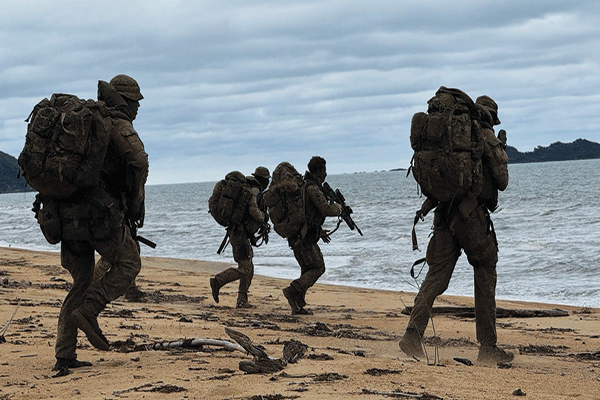
As Australia’s amphibious infantry battalion, the 2nd Battalion, Royal Australian Regiment (Amphibious), or 2 RAR (A), maintains a unique reconnaissance capability that enables the Australian Amphibious Force (AAF) to understand, shape and influence the battlespace before the fighting echelon of the 1st Division arrives. Operating across vast distances and complex environments, the battalion’s reconnaissance elements provide commanders with timely and accurate information, ensuring informed decision-making during operations and exercises.
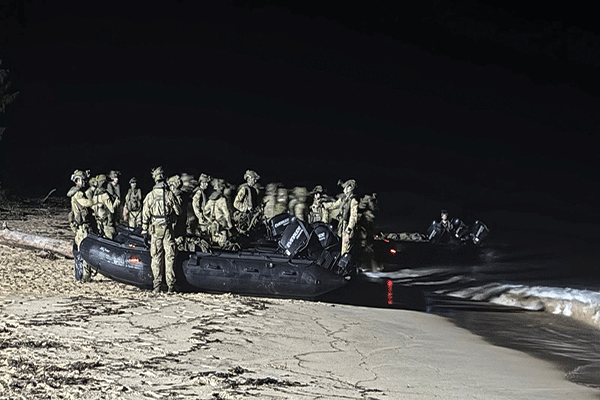
A key component of 2 RAR (A)’s capability is its ability to conduct reconnaissance from ship to shore. Working closely with the Royal Australian Navy’s amphibious fleet, reconnaissance teams are often among the first personnel deployed into an area of operations. Whether delivered by landing craft, Zodiac, helicopters or swimming, these teams move ahead of larger forces to gather critical information on terrain, beach conditions, landing sites, avenues of approach and potential threats.
The ship-to-shore reconnaissance mission is essential to amphibious operations. Before personnel, vehicles and equipment can be safely landed, commanders require a detailed understanding of the operating environment. Reconnaissance teams assess the suitability of beaches and landing zones, identify obstacles and hazards, and provide real-time reporting that contributes directly to operational success. Their ability to operate discreetly and independently allows them to develop an accurate picture of conditions on the ground while remaining undetected.
Beyond the littoral environment, 2 RAR (A) also maintains a robust long-range reconnaissance capability using light mobility vehicles. These highly mobile platforms enable reconnaissance teams to cover significant distances across a variety of terrain while carrying the personnel, equipment, communications systems and sustainment required to operate independently for extended periods.
Movement is essential. The use of light mobility vehicles enhances the battalion’s ability to observe key terrain, monitor movement corridors and gather intelligence over large areas. This mobility allows reconnaissance elements to maintain a persistent presence while retaining the flexibility to reposition quickly in response to changing operational requirements.
The combination of amphibious reconnaissance and long-range mounted reconnaissance provides 2 RAR (A) with a versatile and adaptable capability. Whether operating in tropical littoral regions, conducting expeditionary tasks, or supporting joint force operations, the battalion is able to project reconnaissance forces from sea to shore and deep into the operating area.
Training remains fundamental to maintaining this capability. Reconnaissance soldiers regularly conduct exercises that integrate land, sea and aviation assets, while refining skills in navigation, surveillance, communications and information reporting. Through realistic and demanding training activities, they develop the expertise required to operate in small teams, often isolated from immediate support and relying on initiative and professionalism to accomplish their missions.
As the character of warfare continues to evolve, reconnaissance remains a critical battlefield function. Through its specialist amphibious focus and highly mobile reconnaissance capability, 2 RAR (A) continues to provide commanders with the situational awareness needed to operate effectively across Australia’s vast and diverse operating environments.
SGT Jordan Hoegger