


Q + A with Kevin ‘IRISH’ O‘Halloran
1. You migrated from Dublin to Australia with your family in 1970 and grew up in Melbourne. What do you remember about those early years, and what inspired you to join the Australian Army in April 1981?
Growing up in Melbourne, Victoria and attending University High School (Uni High) in Parkville between 1974 and 1978 meant I was part of a unique era surrounded by distinct local subcultures. This included all ranges of European cultures which shaped my upbringing. My years at Uni High were backdropped by the friends I had made and the subcultures I was exposed to.
Between 1974–1978 there was school AFL and soccer matches, including athletic events which were regularly played nearby at Princes Park. However, most fun times were just on the huge square grounds to the rear of the school. I fondly recall wet, muddy games of soccer on the massive local ovals—and occasionally making a mess of the changing rooms. And the cricket games with steel rubbish bins and the generic rules of school cricket.
The local area vibe was also influenced by my school friends. Being only steps away from Carlton and Brunswick meant the sights and sounds of the Mediterranean weren’t far. With the smell of coffee or pizza from nearby Lygon Street. This all defined my high school boundaries. As most of my friends were first born Australians to migrant parents. I was the only one who was a migrant so to all intense and purposes, I was the wog. This meant we had a variety of cultures to enjoy as friends together. We even still have school reunions that are now 50 years on.
I enlisted in the army because I had a difficult childhood. As a young child (1970-1973) I grew up in Roman Catholic schools, orphanages, and unfortunately around domestic violence and alcohol abuse. My father was an alcoholic. I think I was drawn to the military probably because of the camaraderie and the chance to be posted far away from home. The military became my surrogate family, a second family so to speak, that has now lasted a lifetime. I came from a background of family separation, abuse, orphanages and finally a single parent household. And before I joined the army, Ma had finally met a new man, who eventually became my step-father. So joining up was an easy path for me to take.
So, I joined the army aged 19 and served 30 years in the regular army and 2 years in the reserves. I was born on the 19th May 1961, and I was reborn on enlistment on the 8th April 1981. I was a different person from that day forward. Thanks to the Vietnam Vets and I will always remember them. They were like big brothers and fathers to me. To be a good soldier, what the Vietnam vets taught me, is what you think is morally-ethically correct, then that thought compels you to intervene. By what you decide to do, not only as a soldier, but a person as well, every day of your life, and not just on operations, you will be judged a good person – or not. And sometimes you need to break the rules, to achieve the aim, just like we did in Rwanda.
And I’ll always remember the one military axioms I have carried throughout my entire life and that was: “Don’t be a bully or a hunter, Irish. Don’t be a protégé or a hero watcher. Be a protector.”
Be a protector. I’ll always remember that.
2. You served for more than 32 years in the Australian Regular Army, including operational tours with 1 RAR and 2 RAR. What were some of the defining experiences of your military career, and what did they teach you about leadership, mateship and the responsibilities of serving as an Australian soldier?
I remember three separate platoon competitions, growing up, that I will never forget. They were called Holy Grail 1985; Excalibur 1986; and Dragon Slayer 1987. Why do I remember these particular platoon comps. Because at that time, I didn’t know what a human body was capable of, in withstanding such immense physical abuse. I now know and understand how much a body can take before it gives in. Also, in 1 RAR between 1981-1989 I deployed twice to Malaysia in 1983 as a Bren Gunner & in 1989 as Section Commander.
And throughout my entire formative years being trained by those Vietnam vets, their style of leadership qualities was always a big influence on me. I would only take from them their good qualities of leadership and make it my own.
In the School of Infantry (SOI) 1990-91, I was a Section Commander Instructor and was able to pass on the Vietnam Vets ethical and moral values that I had learned from them to our future soldiers. That was a great privilege and responsibility for me.
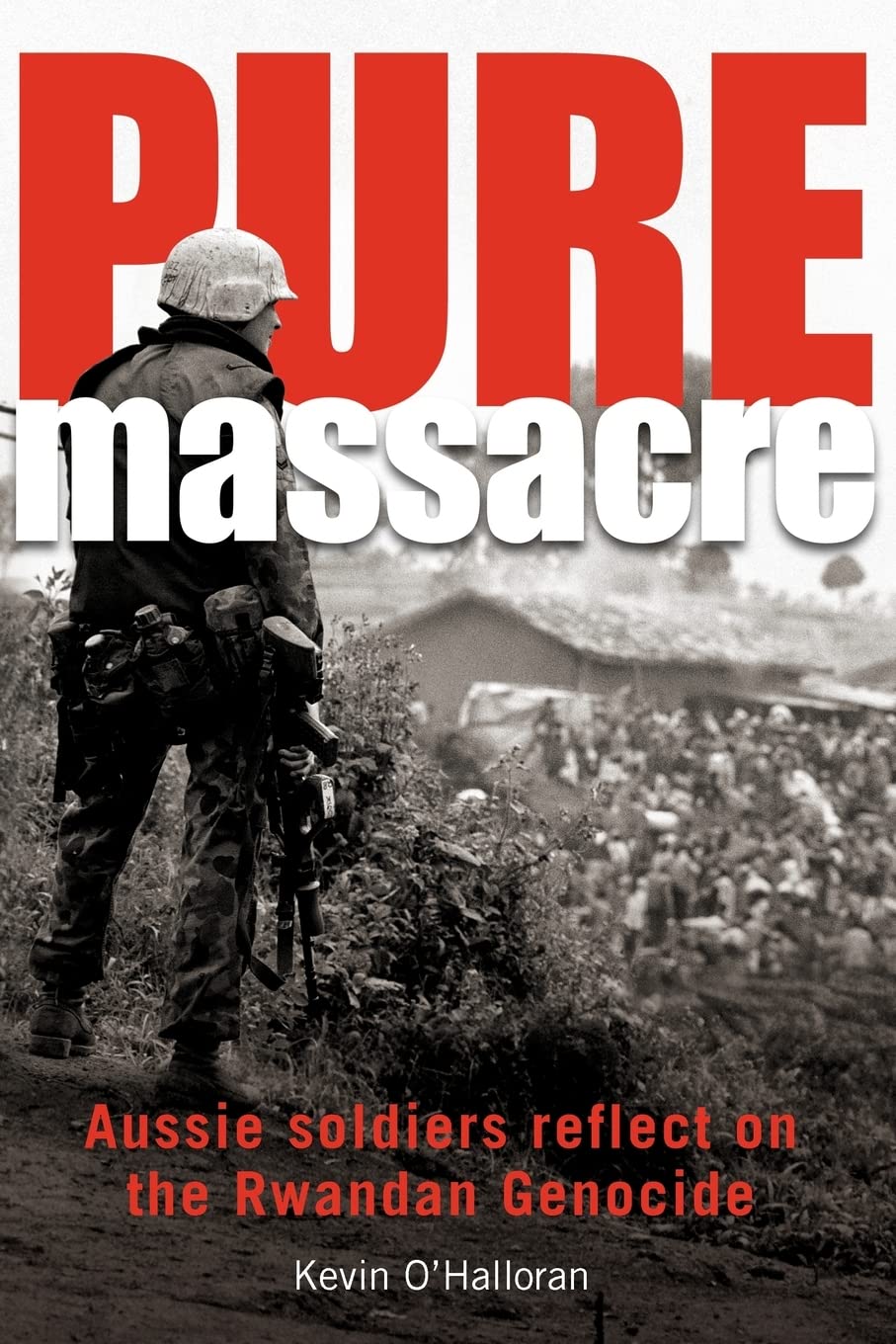
2/4 RAR 1992-95, I was the last Pioneer Sergeant to wear the beard in 2/4 RAR before it disbanded. Bit of history there as 2/4 RAR delinked in February 1995 to become 2 RAR. We deployed to Rwanda from February -August 1995 and I was the Platoon Sergeant of 4 Platoon Bravo Company 2 RAR (4B2). It was led by Lieutenant Steve Tilbrook MG. OP TAMAR, as it was known, was an operation that really opened up my eyes to the feckless United Nations and their inept policies. So embedded was this operation in my head I ended up writing two books about it and was fortunate enough to have them both published. Pure Massacre in 2010 and UNAMIR II Rwanda 1994-95 in 2012.
SOI 1996-99 That’s where I met Michelle my wife in June 1996. I was an Assault Pioneer Section Instructor in Specialist Wing SOI. I was promoted to WO2 in 1997 and took over as the Section Sergeant Major of PNR SECTION SOI. I was posted back to 2 RAR in January 2001.Between Oct 2001-May 2002, I deployed on OP TANAGER East Timor. I was the Company Sergeant Major with Charlie Company 2 RAR in East Timor. I was then the OPSWO for BHQ 2RAR till mid 2003.
In 2004 I was posted to Land Warfare Centre, Leeuwin Barracks, Fremantle as an Ops WO. In 2006 I was promoted to Warrant Officer Class One and posted to 16RWAR Irwin Barracks as the Regimental Sergeant Major of 16RWAR.
And then Project Fromelles, 26 January-19 July 2010. And I spent a lot of time in those cemeteries in France and Belgium in 2010. I was posted to Darwin in January 2011 and I retired in December. I didn’t discharge that’s a negative word after completing 30 years of ARA service.
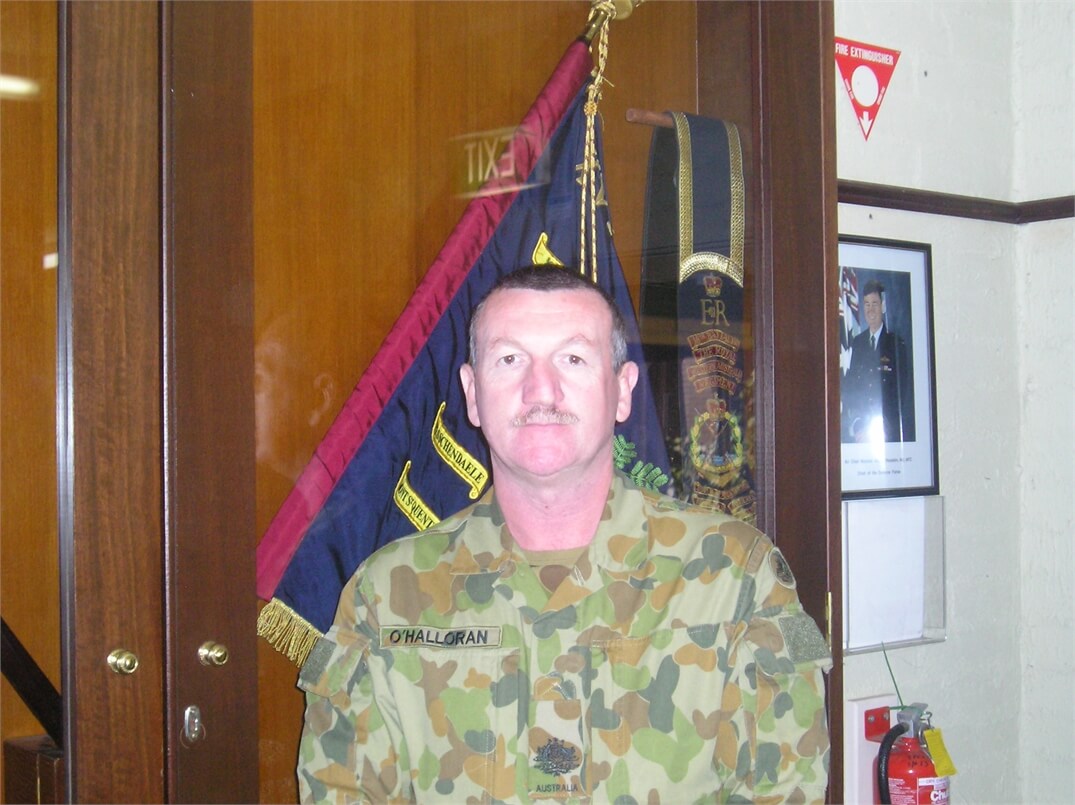
3. Your first two books, Rwanda and Pure Massacre, document your experiences during the 1995 deployment to Rwanda, including personal accounts of the massacre at Kibeho. What prompted you to write these books, and why was it important to record the experiences of those who served during this difficult chapter of Australia’s peacekeeping history?
What do I remember? Everything. When I got back from Rwanda, that deployment’s impact had a profound effect on me. My brain back then was like a demolition derby. A car crash. There were bits flying everywhere. I was trying to process everything. So, I had to get it out of my head, and I wrote everything down. Hence how the book came about. So, in April 2010, I published my first book Pure Massacre: Aussie soldiers reflect on the Rwandan genocide, about my experiences as a platoon sergeant on operations in Rwanda. The book also had in it a ‘Soldier’s Reflections’ aspect to it, where the soldiers told their version of events.
My deployment to Rwanda changed me in many ways. It opened my eyes to poverty, oppression, and human need. I saw children sifting corn from their own excrement just to have something to eat. I saw men, women and children afraid of death, I saw their fear and I saw that terror in their eyes. I saw families destroyed by continuous genocide. I saw bravery, kindness, and evil, the devil up close. I saw human suffering on a scale I had never encountered before. That was a turning point in my life.
People sometimes asked me whether I think I made a difference or not by being deployed there. I think we all made a small difference there, and if everyone makes a very small difference, in time it will make a large difference. Trying to be humane and just in a war is very difficult, but it differentiates us from those we went over there to stop. I am proud I served in a military with rules of engagement that sought to protect innocent life, as we have in Orders For Opening Fire (OFOF) cards. I am very proud to have served with the people who joined our military for all the right reasons.
Then I realised that maybe I could contribute to lessons learned. So, in April 2012 I published my second book Rwanda: UNAMIR 1994/1995, which is now being used as a training manual in the ADF. It was the first book written for a Military History Series designed to inform and educate future commanders of the ADF. In February 2020, we were awarded the Meritorious Unit Citation for an operation we conducted 25 years earlier.
So, it was important to record these experiences so that future soldiers and commanders could have a reference point to their questions. Both of these books convey several profound truths about the realities of modern warfare, institutional gridlock, and the hidden psychological aftermath of military deployments. It had to be firsthand interviews and eyewitness accounts, so that it wasn’t just me telling the story.
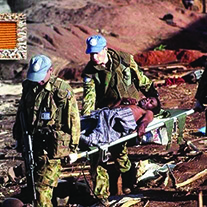
4. The events at Kibeho remain a significant and confronting chapter in Australia’s peacekeeping history. What do you believe today’s soldiers and the wider Australian public should understand about the deployment and the circumstances surrounding the massacre?
Firstly, that the soldiers have a voice. And I wanted to give those soldiers a ‘Voice’ in reference to their overlooked Military History. There were no notable books specifically covering the UNAMIR II timeline. And what I hope the reader gets out of the text will depend heavily on which specific book they are reading.
If they are reading ‘Pure Massacre’ then this is the primary source book written about this exact massacre provided by soldiers accounts. You get a gritty, detailed look at the logistical, medical, and operational challenges faced by soldiers’ tasked with support missions in the immediate aftermath of a genocide.
If they are reading ‘RWANDA’ then this chronicles the military aspects of the deployment with military symbology and weapons used by both belligerents. Both books have ‘Eyewitness Accounts of Kibeho’ and gives the reader a haunting, first-hand look at the events of 22nd April 1995, understanding exactly what it was like for peacekeepers to stand by—hamstrung by strict UN rules of engagement—while thousands of displaced persons were killed.
5. You retired from the Army in 2011 after a long career in uniform. How did you find the transition to civilian life, and did writing become a way to remain connected to your military experiences and the people with whom you served?
For me I transitioned straight away into the mining community here in WA. However, it was a difficult job given my previous time in the ADF. The mines are all about money and not necessarily about safety. So, I only lasted seven years there.
My writing continues to this day where I have contributed to other books and authors. It helps immensely as a coping mechanism for my challenges. I write mainly military stories with a narrative aspect to it. But I am also proud to say I was able to do something significant with my life, something positive. After serving in the ADF for over 30 years, I now volunteer to serve in my community as an Executive Committee member of the Royal Australian Regiment Association of WA. But most of all, I am proud to have such a great family. Both civilian and defence families. Relationships, networking, looking after each other is everything. And that is what counts most in life.
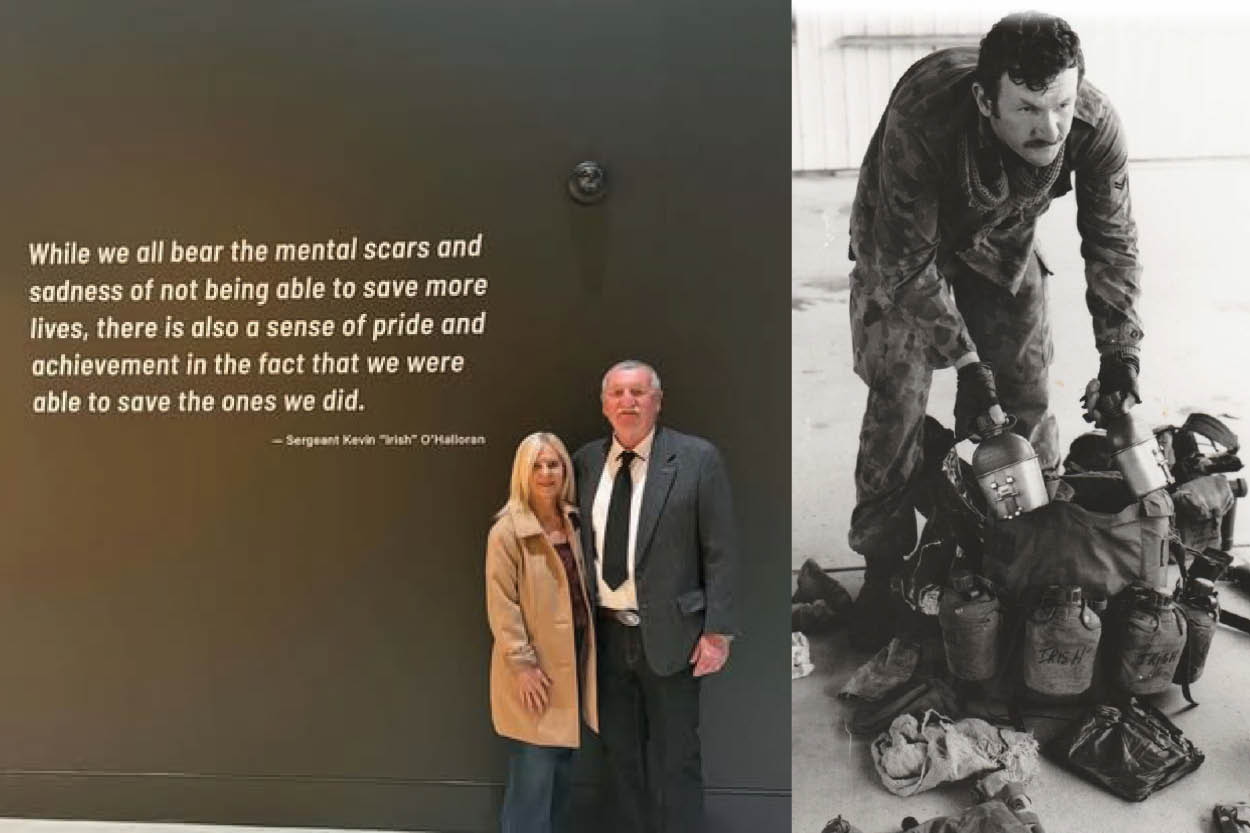
6. Your words are displayed in the peacekeeping section of the Australian War Memorial. What does that recognition mean to you, and how important is it that the personal experiences of soldiers are represented alongside the official historical record?
In the context of the Australian War Memorial (AWM) and the phrase ‘in perpetuity’, it refers to the commitment to honor, remember, and care for fallen service members ‘forever and for all time.’
This also relates to the words spoken, written and displayed by veterans in the AWM. And depending on where you encountered these words, the phrase connects to three primary meanings within the AWM and Australian veteran system.
Firstly, for veterans, the words displayed on the walls of the Australian War Memorial (AWM) are not just abstract text. They represent a profound, living acknowledgment of their personal service, shared trauma, and of fallen mates. To those who have served, these inscriptions bridge the gap between their private memories and the nation’s public gratitude.
Second, the meaning of those words serve as a validation of the unseen scars they bear. Modern additions, such as those from my book explicitly recognise how veterans made it home, but never truly recovered. For veterans living with PTSD or physical injuries, these words mean their ongoing, quiet sacrifices are formally seen by the nation they served.
And finally, recognition of those veterans who stand as resolute witnesses and chroniclers of those grim days on deployment. Their words are a lingering echo of the courage that defied all odds within the crucible of combat. In my book veterans describe in their own words the valour, triumphant and then the heartbreak of those fateful days. A symphony of disaster.
And as every veteran knows commensurate with the AWM’s vision and values, the greatest sacrifice is always the one that hurts the most. Because it’s not about sides, it’s about our future. The scars that we bear as a country from that aptly named ‘The Great War’, even today, nature still struggles to heal. And any insult to these great monuments or to its commemoration would rightly be considered a great crime against the whole of humanity. Because such insults would stain the men and women of former generations, who would be robbed of the remembrance of their virtue. And any future generations of the sight of their sacrifice in recitation.
7. You are currently working on your third book, which tells the story of an ANZAC soldier in your own family who survived the Battle of Fromelles. How did you discover this family connection, and what has researching his story revealed about his wartime experiences?
Charlie’s story is an amazing one, and at the beginning, I could never have imagined any of Charlie’s research being discovered. And noting, like with many ANZAC soldiers’ stories, Charlie’s story too was a mystery in our family tree. And while I was the Regimental Sergeant Major-Ceremonial for Project Fromelles, my wife’s Aunt Mrs. Susan Moore, came to me with a family request. Aunty Sue told me about Charlie, whom the family knew extraordinarily little about except that he fought in the First World War.
And that Michelle’s Great Grand Mother, Jane Vera Noel Boyd-McCredie (nee Butler) was his sister. But Aunty Sue’s most crucial request was ‘Could I find him?’ Aunty Sue of course was eager to see or hear anything at all. And she was especially delighted by what I showed her first, when I found a photo of Charlie in his AIF uniform. And then soon after the flood gates let go. Aunty Sue was about to learn everything about Charlie, not just a photo, that she could ever have imagined possible. As a treasure trove of documents and images brought Charlie back to life for us. From family photos to military service records, all the way to a newspaper obituary release, that tied everything together.
After my experiences on Project Fromelles, I became obsessed with finding Charlie’s burial site. There were no qualms about finding 3479 Private Charles Dixon Butler. Family comes first above all else irrespective and I researched Charlie’s military life extensively. His body, to my knowledge, has not been recovered but his name is on the VB panel wall. He has been mentioned in the Red Cross communique as ‘been buried five meters to the rear of the 2nd Old German Line (OG2) near Reincourt’. And I also asked one of the best investigative experts on military battlefield history and unmarked WWI graves to assist, Mr. Adam Holloway, of DND Battlefield Tours.
Long before I learnt of the existence of the AWM Red Cross Files, I had obtained Charlie’s brief military story from my wife’s Aunt, Mrs. Sue Moore. I had always wondered what battles Charlie had taken part in. And to my amazement, I found that Charlie had been in the 54th Battalion AIF and was involved in three major Australian battles. Fromelles, On the Somme and 2nd Bullecourt.
Project Fromelles was conducted between January – July 2010. I reinterred 250 Australian and British mates from the Battle of Fromelles and also one from Messines on the Project. The best thing I ever did in my entire army career. So powerful was its impression on me that I am now writing a third book. It’s about an ANZAC relative of mine that survived the Battle of Fromelles. The title of the book is ‘Foreign Land.’
8. Having written about your own generation of soldiers and now researching a relative who served during the First World War, have you found common threads between the experiences of soldiers separated by a century?
Yes, between Charlie’s story and my own there is a common thread. Whether by choice or necessity, war has always been a constant in our Australian military history. The stories we tell, the justifications we find for the violence, and the understanding we seek for the loss. They all reveal something about our vision and values as Australians. Those battles fought on the Western Front are all recognised by military historians as the archetypical elite battles. These battles are of immense importance to the Australian psyche. And those battles are imbedded in the Australian national consciousness. Even though some battles were ironically disastrous defeats, led by military ‘elitist’ incompetence and grandeur.
But the most common thread between the two generations is the ANZAC Spirit. Everyone always talks about the ANZAC spirit, yet no one can truly state it’s meaning. The ANZAC Spirit is an ‘idea.’ It’s the idea that we all have value. And in the end what we were, are, and will continue to do is fight for each other. This ANZAC spirit is also still relevant to this day. The enduring struggle of our previous generation created mateship, hardship and inevitable sacrifice. ‘For we are one and free.’
And the person I admire the most is Charles Dixon Butler. My wife Michelle’s great grand uncle. Charlie was 36 when he joined the AIF. Why did he join? What prompted him to serve? What vision and values did he possess? The history of the human race has thousands of different conquests across ages, regions, and cultures. But it would be difficult to find one that played such a decisive role in Australian military history than that of the Great War. Charlie survived that battle and its outcome echoes through to us even to today. And I wonder given what he went through. What would I ask him. What would Charlie think of our Australian society today? Was it all worth it
9. What advice would you give to veterans who have considered documenting their own experiences but have not yet taken the first step? How can they ensure their stories are preserved for their families, their units and future generations?
On history and facts, I am what is called a narrative historian. Narrative historians do not twist the facts in a narrative. I maintain that anything you can learn by writing novels–by putting words together into a narrative form–is especially valuable to us when writing history. There is no great difference between writing novels and writing history other than this: you need to write well. You have a character named ‘Charlie’ in a novel who’s not our Charlie Butler, you can give him any colour eyes you want. But if you want to describe the colour of ‘Our Charlie’s’ eyes, then you have to know what colour they were. They were brown. So if you are working with facts that come out of documents, they have to be accurate.
What I have found to be very helpful is to have a whiteboard with columns drawn down it. Then on top of the column, put the timeline year(s) you are working in. Then I placed on the left hand side of the board- diplomacy, political, military etc whatever the narrative yield was evoking. That way you can tell throughout your narrative what was going on at that particular time. This is where the plotting comes into it.
A novelist works with facts that come out of their head or most likely out of their memory. But a narrative historian has to have control of their facts. Once you possess them, you can handle them exactly as a novelist handles their facts. A good narrative historian should not be false to their facts, and certainly no historian is allowed to be false to their facts under any circumstances.
My advice to veterans who have considered documenting their own experiences but have not yet taken the first step is to read and reread. When you reread you get the great pleasure of discovering what has actually happened. You get the great pleasure of knowing where the author is going and seeing how he goes about getting there. And that is the learning curve of creative writing. I would tell a veteran who is considering writing to do just that, ‘read and reread.’
10. Finally, what do you hope readers take away from Rwanda and Pure Massacre, and what can readers look forward to in your forthcoming book about your ANZAC relative?
What I hope readers take away from the Rwanda and Pure Massacre books is that we all have value as human beings. And that we will always fight for each other.
My next book is titled ‘FOREIGN LAND’. As RSM Ceremonial for Project Fromelles I became fascinated by the DNA process. On the project I learned that a relative of the family – Charlie my next book – survived the Battle of Fromelles. After their identification was released, I found that some I buried were Charlie’s mates. I was hooked. Charlie was KIA in the 2nd Battle of Bullecourt 15th May 1917 and he remains missing to this day. I was determined to find him and to give ‘Our Charlie’ just like his mates his final military journey.
My mindset for this book is that to understand our present, nothing serves us better than to study our past. Including its myths, it’s good and bad, and most of all, its bloody aftermaths. This book is also a panegyric, and I have used facts from both history as much as those I have used from my head. However; Charlie’s story is not made up, I discovered it, it was already there waiting to be told.