

Bush Skills Build Sniper Capability
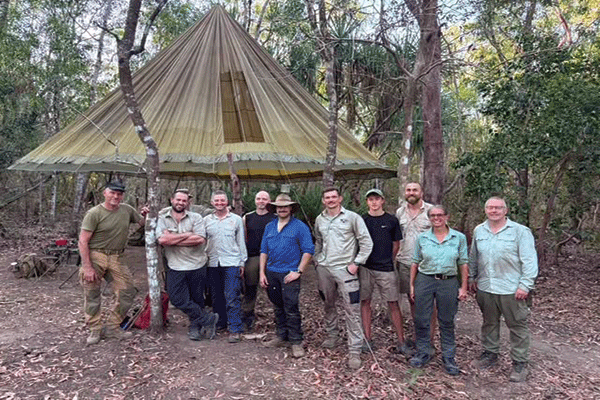
Two serving snipers from 5/7 RAR have returned to Darwin with a range of traditional bushcraft and survival skills after completing a three-day course designed to strengthen their ability to operate effectively in remote environments.
Funded by the Australian Sniper Association (ASA) through its charitable Sniper Capability Fund, the soldiers attended the Bushcraft Survival Australia (BSA) course from 8–11 August at BSA’s dedicated training property near Berry Springs, south of Darwin.
The first activity delivered under a new partnership between the ASA and BSA, the course provided an opportunity for the soldiers to develop fieldcraft skills using minimal equipment and the natural environment.
The training property, with its combination of dense bushland, watercourses and open scrub, provides an immersive environment for bushcraft, navigation and survival training.
The partnership between the two organisations grew from direct feedback from serving snipers.
At the 2025 Double Diamond Sniper Concentration, ASA founder and president Greg Robertson spoke with snipers from across SOCOMD and the Royal Australian Regiment, asking how the association could best support them.
Among the feedback was a request from 5/7 RAR for access to additional bush survival training to enhance fieldcraft, resilience and environmental awareness.
The ASA subsequently identified Bushcraft Survival Australia as a natural training partner. BSA founder Gordon Dedman, a former 1st Commando Regiment member, brings extensive experience in traditional fieldcraft and survival instruction.
BSA offered support to the sniper community, enabling the ASA to establish a partnership that provides serving snipers with access to specialist training at reduced cost.
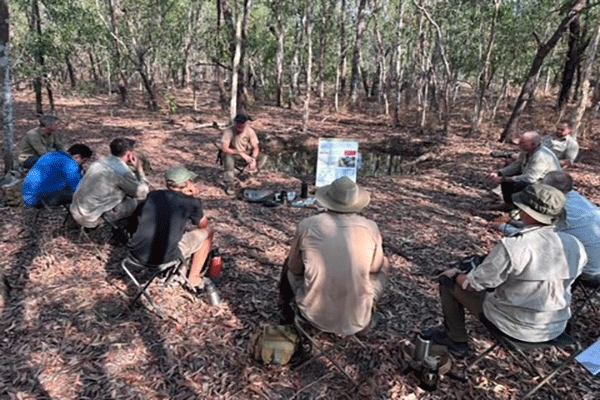
For the two 5/7 RAR soldiers, the course covered a broad range of bushcraft skills, including primitive shelter construction, firecraft, water sourcing and purification, navigation without GPS, tracking and environmental awareness, knife and tool use, and food procurement.
The emphasis was on developing the ability to operate with minimal equipment and rely on knowledge and skills rather than technology.
Several elements had particular relevance to the sniper role. Operating with limited resources can reinforce self-sufficiency and resilience, while navigation using natural cues provides an additional skill set should digital systems become unavailable. Understanding tracks, signs and changes in the environment also reinforces the importance of observation and environmental awareness.
The course also placed considerable emphasis on patience, problem-solving and maintaining composure while working through unfamiliar challenges.
The soldiers found that the slow and methodical nature of bushcraft closely complemented the discipline required in their normal role.
One of the key lessons was the importance of reading the environment and recognising subtle signs, tracks and natural patterns.
The soldiers also gained confidence in living and working with minimal equipment, while learning primitive firecraft proved particularly challenging in the wet Northern Territory conditions.
A standout experience was the final field exercise, which required the soldiers to bring together the skills developed throughout the course, including navigation, shelter construction, water, fire and movement.
For the ASA, however, the value of the course extends well beyond the two soldiers who attended.
Selection was managed internally by the 5/7 RAR sniper supervisor, with the soldiers chosen based on their current roles, suitability for the training and their ability to pass the knowledge on to other members of the sniper cell.
On returning to Darwin, the two soldiers briefed their chain of command and began preparing training notes and lesson plans, along with practical demonstrations and short training modules covering areas such as firecraft, shelter construction and environmental awareness.
The intention is to incorporate relevant bushcraft principles into upcoming field training and refresher sessions, allowing the skills gained by two soldiers to be shared across the wider sniper cell.
For the ASA, this knowledge transfer is central to the purpose of its Sniper Capability Fund, which is established to support the comfort, recreation and wellbeing of serving Australian Army snipers while contributing to capability and professional development.
The Bushcraft Survival Australia course demonstrates how that support can translate into practical training opportunities — with skills learned by individual soldiers being returned to the unit and shared with their teammates.