

Taking Protected Mobility Training to the Next Level
Applied Virtual Simulation (AVS) is currently developing a significant upgrade to its Protected Mobility Tactical Trainer (PMTT), bringing greater realism, immersion and platform-specific training to an established collective training capability.
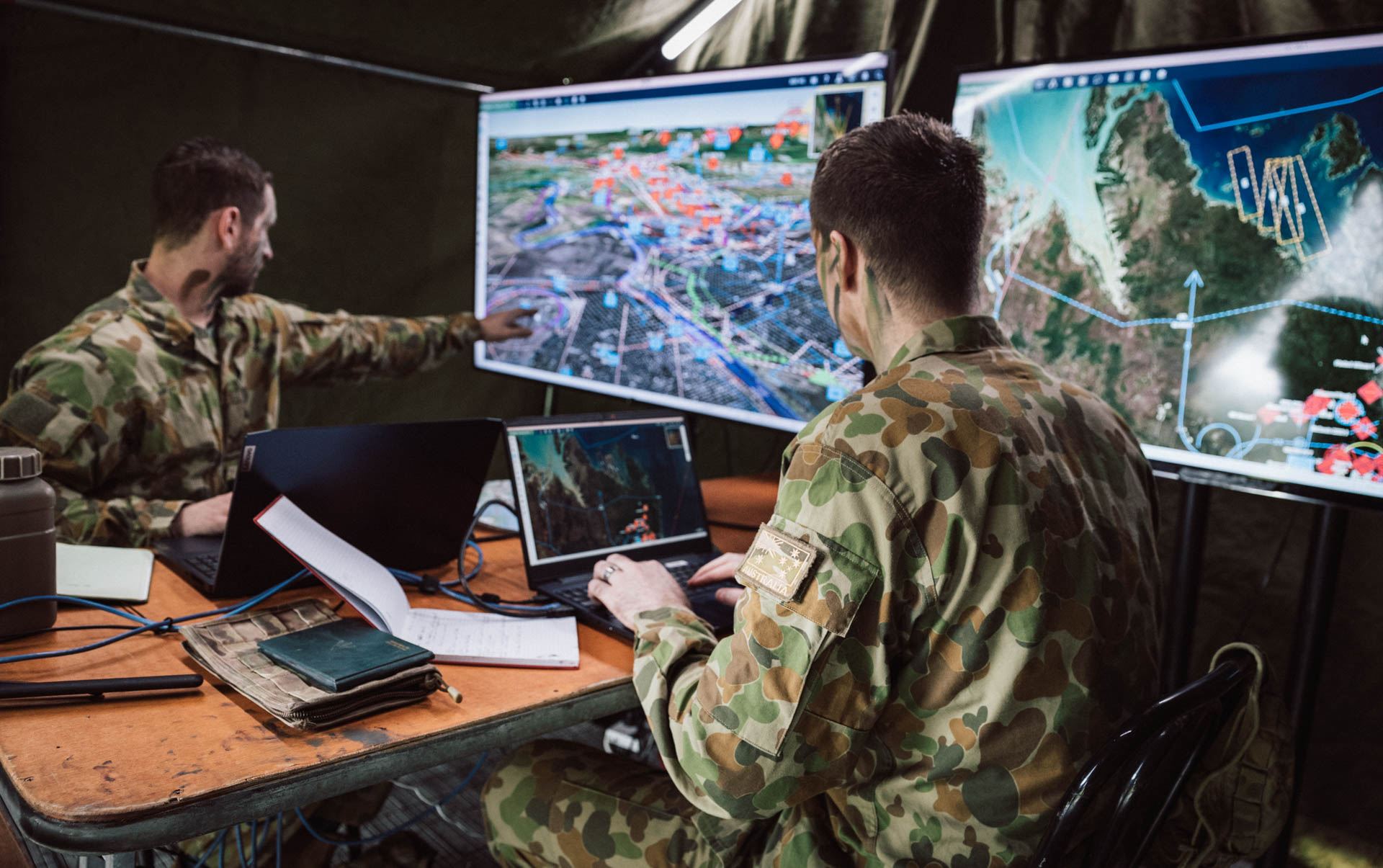
The PMTT was originally designed to provide protected mobility crews with a shared virtual environment where multiple vehicles could operate together. Its focus is on collective training, including decision making, crew coordination, tactical scenarios and radio communications, while reducing the need to dedicate operational vehicles and fleet time to training. The system supports multiple crews operating within the same scenario, connects with wider Common Simulation Software (CSS) and currently trains more than 5500 soldiers per year.
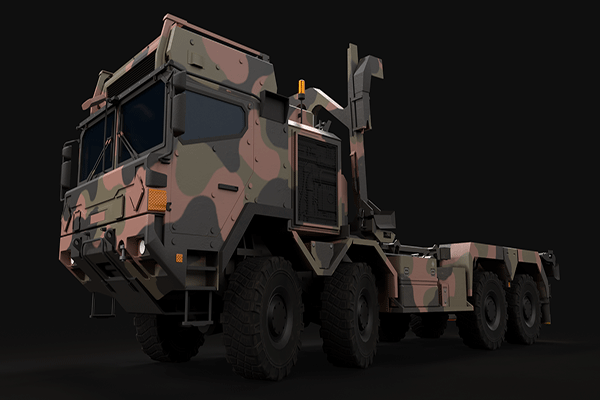
The new uplift builds on this foundation with a suite of hardware and software improvements designed to make training more immersive and closely aligned with the systems crews encounter in the real vehicle.
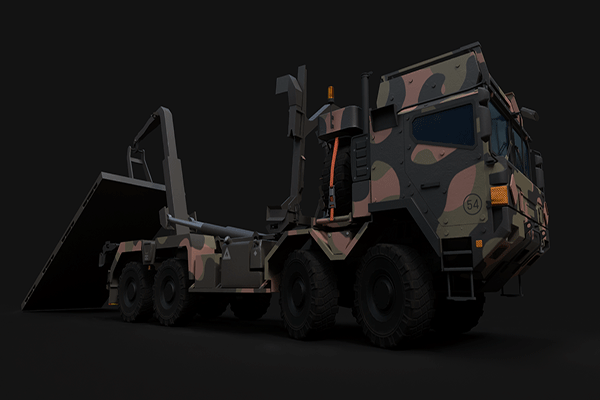
A key feature is mixed reality for all occupants of the simulator. Combined with a realistic HX77 cabin for the driver and co-driver, the upgraded PMTT provides a stronger sense of presence inside the vehicle. The improved physics and graphics will deliver a more realistic driving experience, allowing crews to better experience the challenges of operating across different conditions, creating safer drivers.
The virtual environment is being expanded with reworked difficult terrain with weather effects, giving instructors greater scope to introduce environmental challenges and create more demanding scenarios for drivers and crews.
Communications are also receiving a major uplift. The improved PMTT will feature an enhanced communications system with sidetone and selectable radio channels, providing a more realistic representation of the communications environment crews operate within.
For gunners, the upgrade introduces a high-fidelity emulated MAG58 mounted on a PLATT swing mount, alongside a cupola mounted on a motion platform. This adds greater physical interaction and realism to firing-on-the-move training.
The upgraded cupola also expands the range of weapons training drills available to crews. Trainees will be able to practise procedures including belt loading and functional feed tray cover operation, weapon states of readiness, ammunition run-out and reloading, and weapon stoppages and stoppage drills.
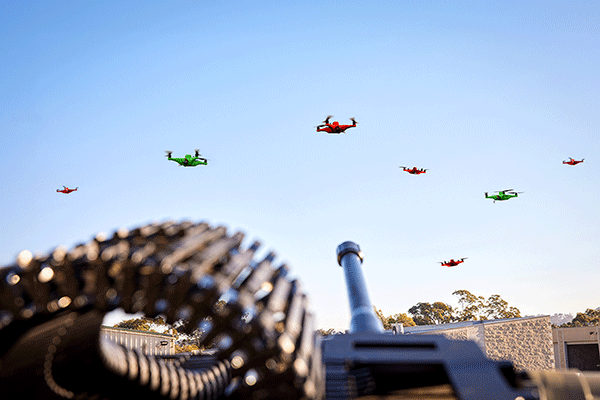
The PMTT will also connect further with the wider AVS simulation ecosystem, including integration with the Horizon Guardian Counter-UAS training system. This will allow protected mobility crews to incorporate drone defence and asset protection into their training, reflecting the increasing importance of CUAS skills in modern operating environments. These threats can be introduced directly into vehicle crew scenarios and tactical exercises rather than being treated as a separate training activity.
Together, these upgrades shift the PMTT towards more role-specific training. Drivers, commanders and gunners can interact with realistic, platform-specific systems while continuing to operate within a shared tactical environment.
The result is a more immersive training capability that allows crews to develop practical skills, procedures and coordination before moving into the operational vehicle.
For AVS, the PMTT uplift represents the next step in making simulation work harder for the user, combining collective training, high-fidelity platform interaction and integrated training capabilities to deliver more realistic and repeatable training without consuming operational fleet time.